
New research: Between Hope and a Home
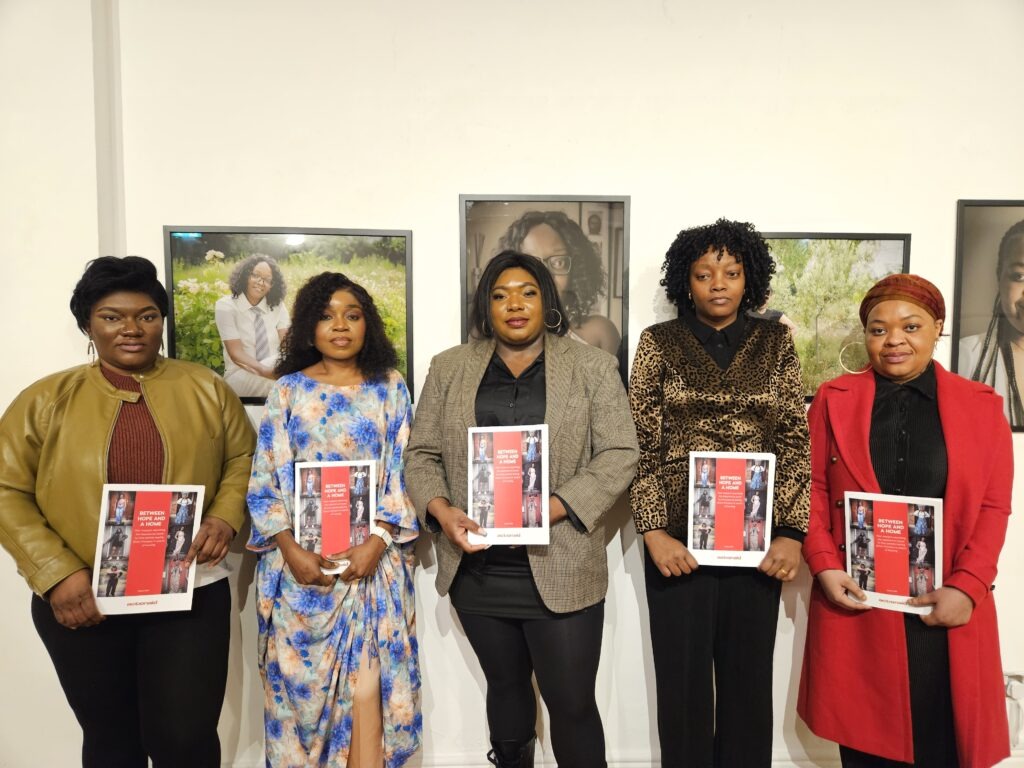
Lone-parent migrant families with legal status in Ireland are being forced to leave Direct Provision and their communities with no realistic way of securing housing, according to new peer-led research published today by ActionAid Ireland.
The report, Between Hope and a Home, documents how lone parents – most of them women – face discrimination, unaffordable rents, inadequate supports, and inconsistent local authority practices that leave families effectively trapped between Direct Provision and homelessness.
Key findings
The key findings of the report are that despite having the right to live in Ireland lone parents experienced racism in the rental market, the impossibility of finding housing within Housing Assistance Payment (HAP) limits, and the distress of receiving eviction letters that uprooted children from schools and community supports. The report comes as it emerged Minister for Justice, Jim O’Callaghan, is to bring legislation to cabinet this week to include harsh new measures that will make situations for families even more difficult.
Under the legislation people granted refugee status will have to wait for three years before bringing relatives, including spouses and children, to Ireland under a planned tightening of family reunification rules.
The ActionAid Ireland report makes clear that while Ireland’s wider housing crisis affects everyone, it does not do so equally. For lone-parent migrants – often black women, and women who feel isolated and are juggling care, work, trauma and unfamiliar systems – the barriers are multiplied.
Rare first-hand evidence
ActionAid Ireland Policy and Programmes Manager, Cillian Quinn, said today: “This report provides rare, first-hand evidence of how Ireland’s migration and integration policies land hardest on lone parents. Families are being told to leave Direct Provision, yet given no workable path to a safe, stable home. The stress this causes parents and children is avoidable and unacceptable.”
Mr Quinn continued: “The report is being published at a time when Ireland is undermining its commitments to refugee rights, affecting some of the most marginalised people in society. Just today, the Minister for Justice is putting forward very harsh measures to restrict family’s abilities to reunify. This will mean that those granted asylum, like the women in our research, could have to wait five years to unify with their families. This is cruel and will not help with refugees overcoming trauma and integrating into Ireland.”
Worrying measures
He added: “This is part of a very worrying set of measures by this government to undermine the protections set out in the European Convention on Human rights for refugees. The government is also falsely saying migrants are responsible for some of the housing crisis, implying that migration threatens social cohesion. Our political leadership needs to be better and Irish people expect more than that. Such policies put vulnerable children at risk, family members waiting to reunify could be also in danger.”
He said people who seek international protection contribute massively to Ireland culturally, economically, and socially.
“The real threats to cohesion are a broken housing system, rising racism, the absence of an integration strategy, and a lack of political leadership to defend our values and the obligations we have legally. The report is grounded in reality. It sets out practical, workable steps that would help families integrate, keep children rooted in their schools and communities.” he added.
Women who took part in the research spoke of how their efforts at integration and self-development, whether through employment or education, were hindered and the fact that a stable home was a prerequisite to moving on in life was ignored.
Between Hope and a Home
The launch today (Tuesday January 13th) will feature contributions from Dr Ebun Joseph, Ireland’s Special Rapporteur on Racial Equality and Racism, and Liam Herrick, Chief Commissioner of the Irish Human Rights and Equality Commission. Also in attendance will be civil society leaders, political representatives, and the women who led the research.
ActionAid Ireland is urging Government to take immediate action:
- Ending the practice of moving families away from schools and communities when they receive status and stopping the transfer of parents with children into emergency centres.
- Urging local authorities not to apply the Local Connection Test to people exiting Direct Provision as instructed by the Housing Agency.
- Raising HAP limits so they reflect actual rental costs.
- Strengthening and resourcing Local Authority Integration Teams to provide tailored, housing-specific support.
- Tackling discrimination in the private rental sector through enforcement and public awareness.
- Embedding gender and equality analysis in all housing and integration policies, recognising the disproportionate impact on migrant women and lone parents.
Voices of lone parents
Eve, a mother of three, summarised the feelings of most of those who took part in the research when speaking about how the government seems to not recognise how challenging it is to secure housing in Ireland:
“It seems to me that they’re not aware, if it is hard for the local people, it is three, four times harder for us. So, their approach should be a little bit more human. Not that we are special but a less downgrading treatment. Like typically, an Irish person, they have families, they have friends, they have, you know, local connections.”
Other voices
- Discrimination based on race: “I feel like they look at colour or other times they just read your surname and never get back to you”. Angela, mother of two children
- Discrimination based on being in receipt of HAP: “When I see a house they tell me they don’t want HAP. Man, the landlord would tell me they don’t want HAP, the ones I see are expensive, and I can’t afford”. Nisha, mother of three children
- Experience of receiving eviction letters: “I remember the shock, of oh God where do I start from, where am I going to, how will I do this, so it’s so stressful”. Miriam, mother of two children
