European Council seen as winner under Lisbon Treaty
-

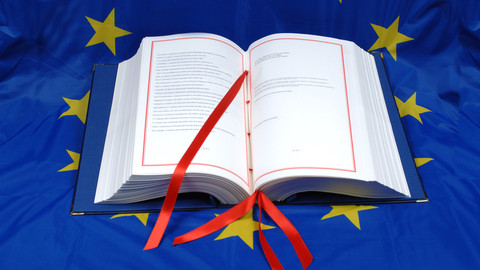
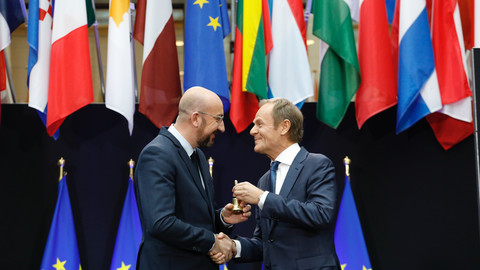
The Lisbon Treaty is shaking up the political landscape in Brussels (Photo: European Commission)

By Honor Mahony
Not quite six months in place, the EU's Lisbon Treaty has already led to a significant shift in the Brussels power landscape, with many of its main actors still trying to find their feet in the new order.
The new rulebook, in force since December 2009 after many years of negotiation and then ratification, greatly increases MEPs' co-legislating powers and creates a beefed up foreign policy post and a president of the EU council.
Join EUobserver today
Become an expert on Europe
Get instant access to all articles — and 20 years of archives. 14-day free trial.
Choose your plan
... or subscribe as a group
Don't miss out on
Our exclusive news stories and investigations. Influential. Investigative. Independent.

Why join?
Watch our editor-in-chief Koert Debeuf explain the reasons in this 30-second video.
Already a member?
But many of its effects were not written into the treaty and are only slowly coming to light as the EU capital goes about its daily business.
The changes have led to a relative decrease in the power of the European Commission, in past times the engine of EU integration, and the Council of Ministers, representing member states. In contrast, the European Council - the union's collected premiers and presidents and now an institution with its own budget and president - and the parliament are are winning out in the power stakes, say academics.
This has been most evident in the current debate over increased economic governance in the EU, where member states, rather than the commission, have taken the lead in the discussions.
Referring to the "competitive environment" among EU institutions now, European studies Professor Joerg Monar, from the College of Europe, says the parliament and the European Council are the "primary poles of power" in the EU. The commission meanwhile appears "more and more squeezed" between the two.
"The European Council has become the true policy-maker of the European Union," agreed the University of Bologna's Professor Lucia Serena Rossi during a conference discussing the post-Lisbon Treaty EU on Tuesday (25 May).
MEPs, for their part, now have co-decision powers on more than 90 percent of legislation, including in whole new ares such as farm policy and justice and home affairs. Euro-deputies also have the right to be informed about international agreements.
Maros Sefcovic, institutional affairs commissioner, said that this has led to a "cultural change" in Brussels. Indicating the commission's potential unease with the new power shift, Mr Sefcovic urged EU member states to remember the "community spirit" noting that it is not only important what kind of decisions are taken but how they are taken.
The commission's role in the future will be a "resolute guardian of the treaties" as well as capitalising on its "undisputed technical expertise" and "right of legislative initiative."
No more hiding behind the veto
The Lisbon Treaty also has implications for how member states act in Brussels. Referring to his past life as Slovakia's EU ambassador, Mr Sefcovic noted that the dynamic in the Council, where countries take policy decisions, is "totally different."
"Now the member states do not have the possibility of hiding behind the veto. They have to come up with much stronger argumentation, much faster. They must be much more persuasive because the decision is in the end taken anyway."
The EU's top politicians are also still learning to cope with the treaty. Richard Corbett, an advisor to President Van Rompuy, notes that his boss and Mr Barroso have had to make a special effort to get on as their roles overlap.
Both politicians now have a breakfast meeting every Monday. "They're adults, they know they must make it work," says Mr Corbett.
Mr Van Rompuy, who has carved out a role as first EU president that is not so directly 'hands-on', but at the same time more than just an agenda planner, said that every treaty has "gaps and uncertainties" in it.
He pointed to the lack of links between the EU's different parts, meaning he has to be careful to informally "establish contacts" with all EU leaders (he plans to visit national capitals this year and next). Just recently, meanwhile, he told political group leaders in the parliament that he would brief them on European Council meetings on the evening they happen.
Other effects have yet to be felt. The European Court of Justice has jurisdiction when the European Council takes a decision by vote, noted Professor Rossi, while the possibility of national parliaments to vet EU laws on whether they are being carried out at the correct level has yet to make an impact.
But the treaty will have to be place for years to know how many of its aspects will play out, prompting some to refer to the famous quote by China's first premier Zhou Enlai when asked about the effects of the 1789 French Revolution. "It's too early to say," he reportedly replied.